
The way we build software is changing fast. With AI, code no longer has to be written line by line in a classic editor. It can come out of language, feelings and interaction. This approach is called vibe coding. But what is behind it?
What is vibe coding?
Vibe coding is a new way of programming in which developers talk to an AI in natural language, or through emotions and creative input, to build software. Instead of memorizing syntax or designing complex structures themselves, the "vibe" comes first: the idea, the mood or the intention.
Put simply: you describe what you want, and the AI turns it into working code.
Vibe coding definition
The term is quite new. Andrej Karpathy coined it in February 2025. A short definition:
Vibe coding is an AI-assisted approach to programming in which natural language, visual or emotional input is used to have code generated and adjusted automatically.
Vibe coding tools
Vibe coding is built on AI-assisted development environments. In most cases you can download them and start right away. The tool writes the code, adjusts it and handles related tasks. Typical tools include:
AI coding models such as GitHub Copilot, ChatGPT, Replit AI, Cursor or Claude Code
Visual interfaces that show code as diagrams or blocks
Voice assistants that understand requirements directly from spoken language
No-code and low-code platforms that increasingly work with AI support
How does vibe coding work?
Ideally, developers work with the AI as an assistant and check its output critically. The process then looks like this:
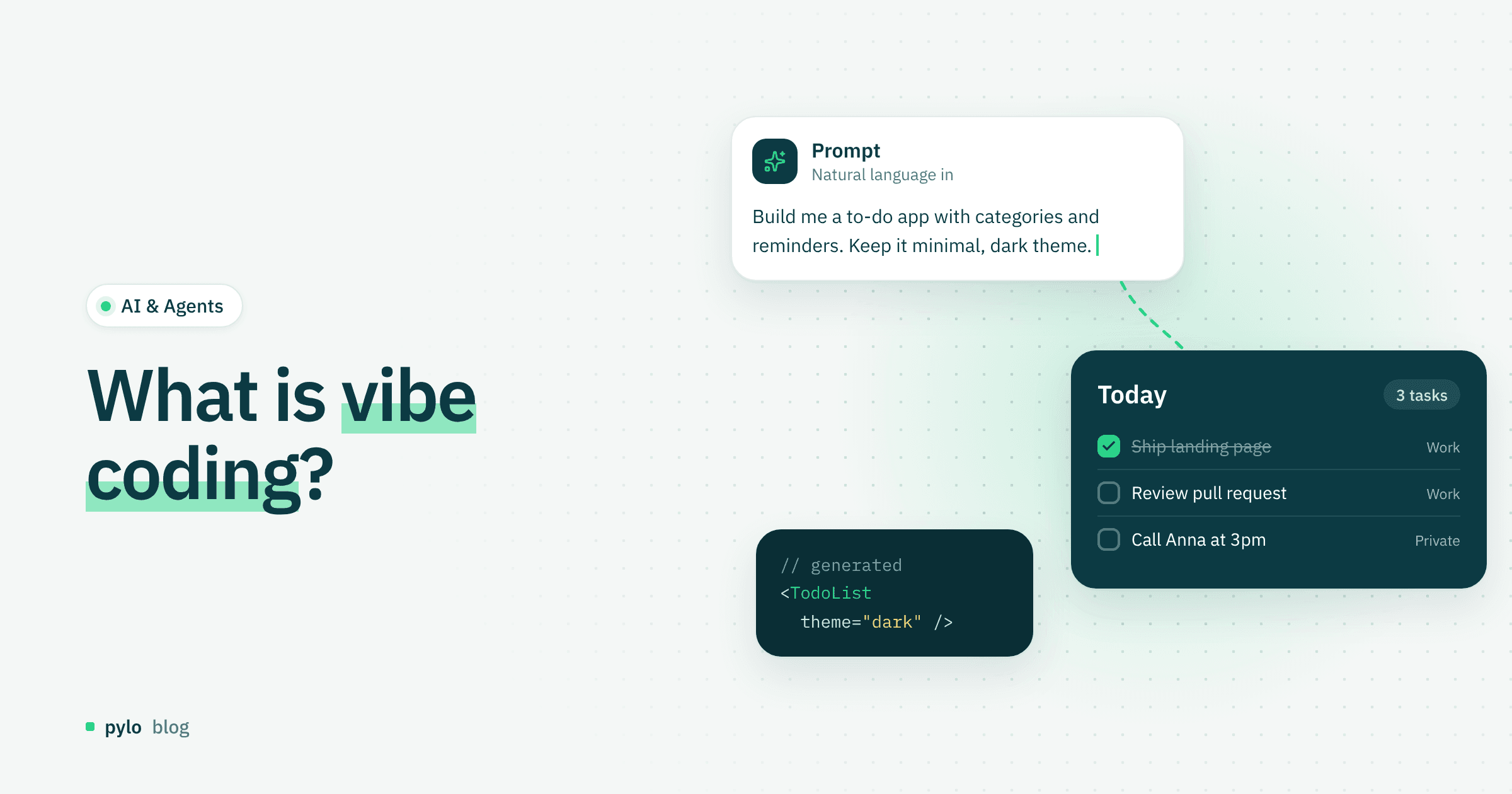
Describe the idea: For example, you tell the AI in plain language: "Build me a to-do app with categories and reminders."
The AI generates code: The system then writes the basic structure for you.
Give feedback: Developers adjust the "vibe" with requests such as "Make it more minimal, with a dark theme."
Iterate: With further instructions, the AI refines the code in a back-and-forth with the developer.
Polish: Manual fixes are possible but not strictly required.
Note: Almost anyone with internet access can use AI tools, so more and more amateurs and non-developers use vibe coding to build their own projects. The next section covers the pros and cons that come with that.
Pros and cons of vibe coding
For developers
For experienced programmers, vibe coding brings a big speed advantage. Routine work like boilerplate code, standard functions or simple data structures takes seconds. That leaves more time for architecture, logic and creative problem solving. Vibe coding is also strong for prototyping, because ideas turn into working applications quickly.
The approach has downsides too. Developers risk losing track of the generated codebase, since they did not write every step by hand. Security holes or inefficient structures can go unnoticed if you rely too much on the AI. And deep technical understanding can suffer if, over time, you lean on vibe coding more than on classic coding skills.
This matters most on the backend. A vibe-coded frontend still needs a real backend with authentication, permissions and a clear data schema, and those are the parts where unnoticed security gaps cost the most. One option is to keep the backend out of the generated code: pylo gives an AI-generated frontend a backend with a defined data model, a GraphQL API and built-in authentication.
For non-developers
For people without a programming background, vibe coding opens the door. They can build their own app ideas, small automations or prototypes without spending years learning syntax. That lowers the barrier to software development a lot and makes the technology accessible to creatives, business owners and hobbyists.
Here too there are clear limits. Without any technical understanding, you quickly reach points where the AI makes suggestions but does not explain why something does not work. Without a basic grasp of logic and data structures, it gets hard to spot errors or judge code quality. There is also a dependency: without the AI tools, a non-developer quickly gets stuck.
A typed schema helps here. When the data model is defined up front and the client SDK is generated from it, many mistakes show up as type errors instead of as bugs in production. pylo works this way, with typesafe SDKs generated from your data model.
Vibe coding vs. traditional coding
Criterion | Vibe coding | Traditional coding |
Entry barrier | Very low, even for beginners | Higher, requires expertise |
Speed | Very fast | Depends on experience |
Creativity | Strong focus on ideas and concepts | Depends heavily on the developer's skills |
Error control | AI can introduce bugs | Human logic checks more closely |
Independence | Highly dependent on tools and AI | Fully independent work possible |
Learning | Little technical learning | Deep technical understanding |
Security | Potentially risky, a black box | Fully under your own control |
Conclusion
Vibe coding adds to programming. It does not replace it. It makes getting started easier, speeds up development and frees up creative energy. At the same time, developers should know its limits. Only those who understand the fundamentals can really judge generated code and use it safely. The future of coding probably lies somewhere in between, as a mix of human logic and AI creativity.
If you vibe code a frontend, give it a backend you can rely on. pylo provides the data model, API, authentication and typesafe SDKs, so the generated code only has to handle the interface.
Keep reading
AI & Agents
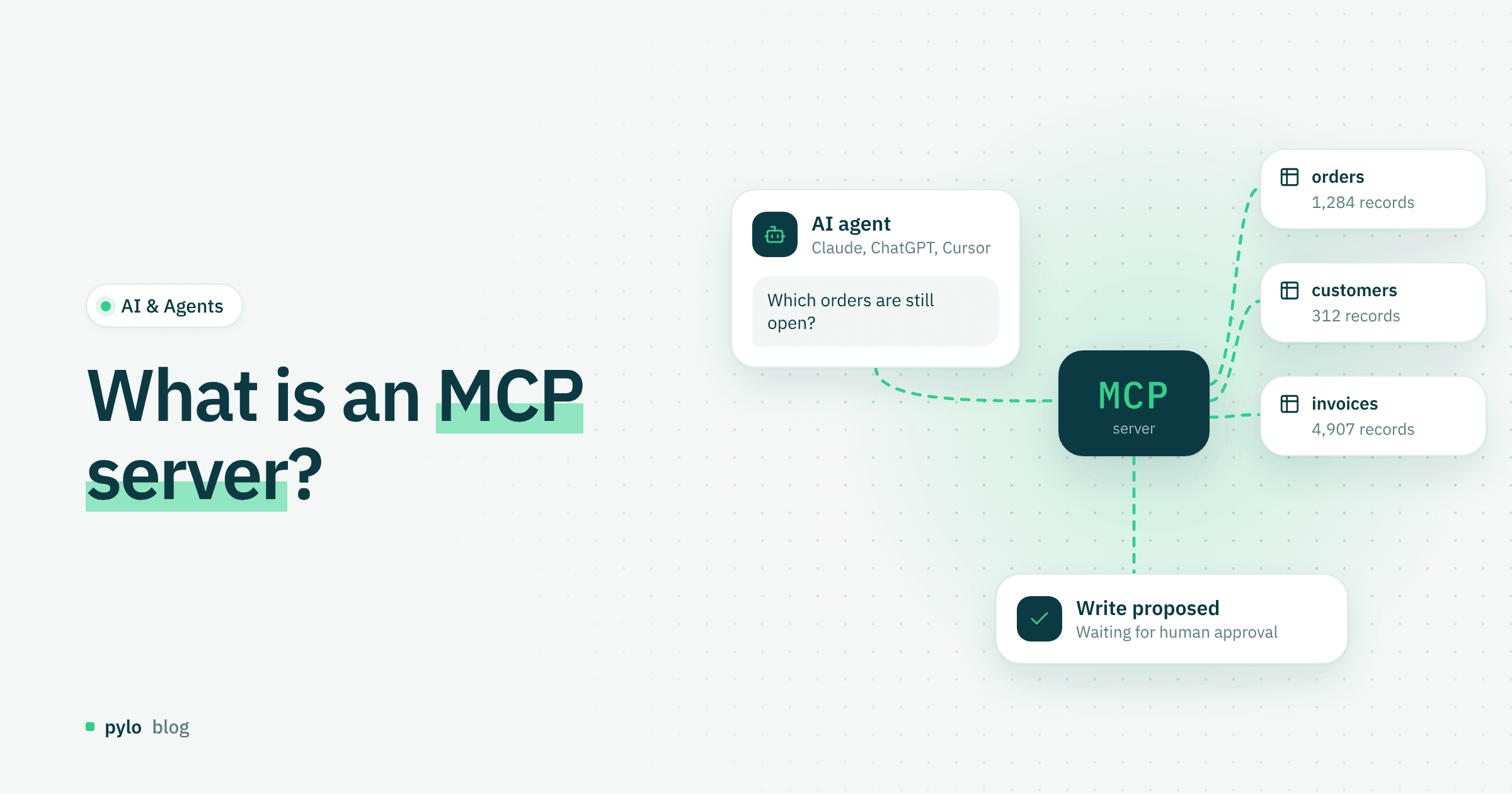
What is an MCP server? Definition, how it works and why it matters
What MCP is, how an MCP server works and why it is becoming a key technology for connecting AI to company systems securely and efficiently.
Read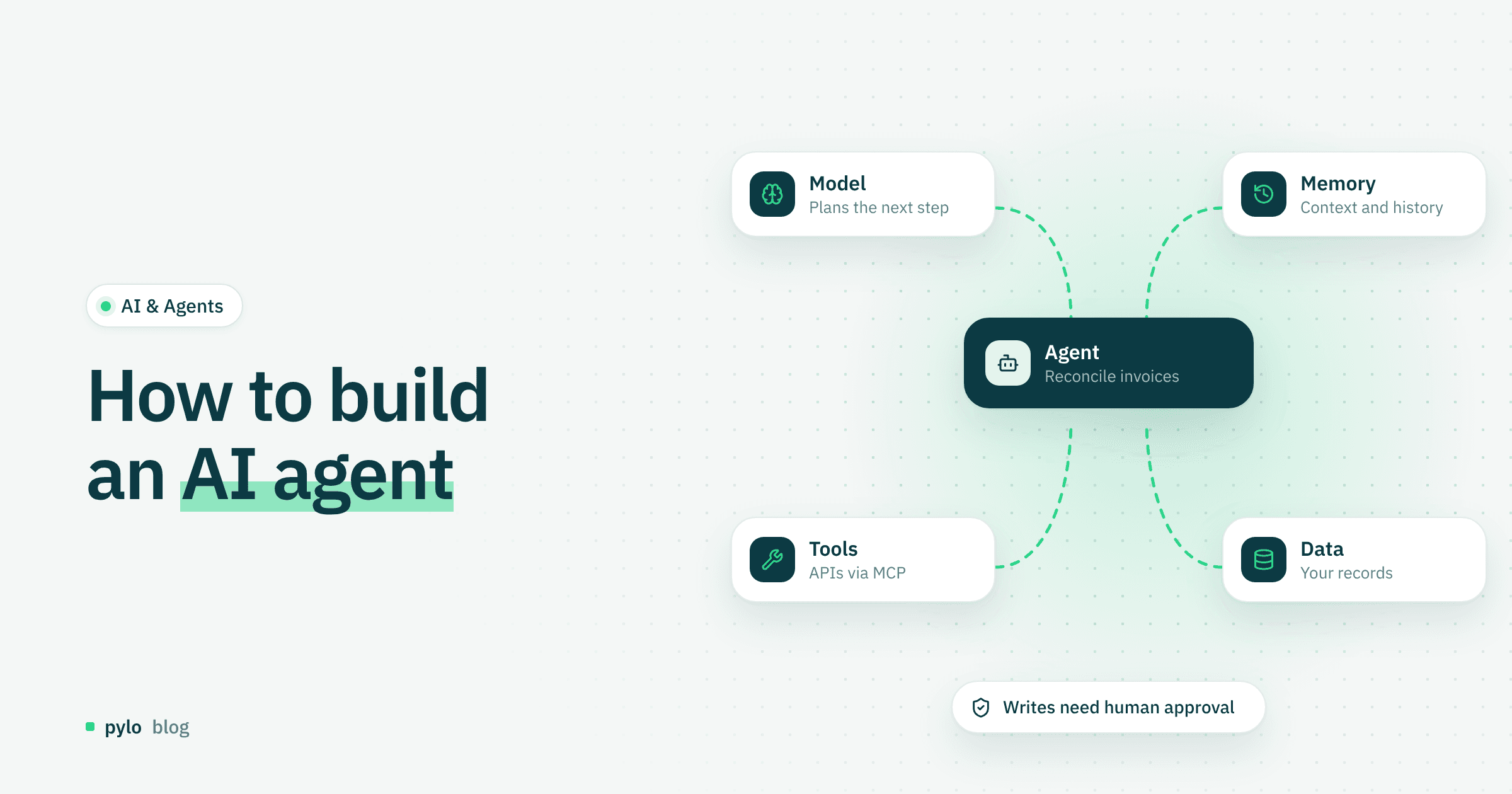
AI & Agents
How to build an AI agent: types, steps and tools
AI agents handle everything from automated tasks to real decisions. Here is how they work and how to build one for your company.
Read