
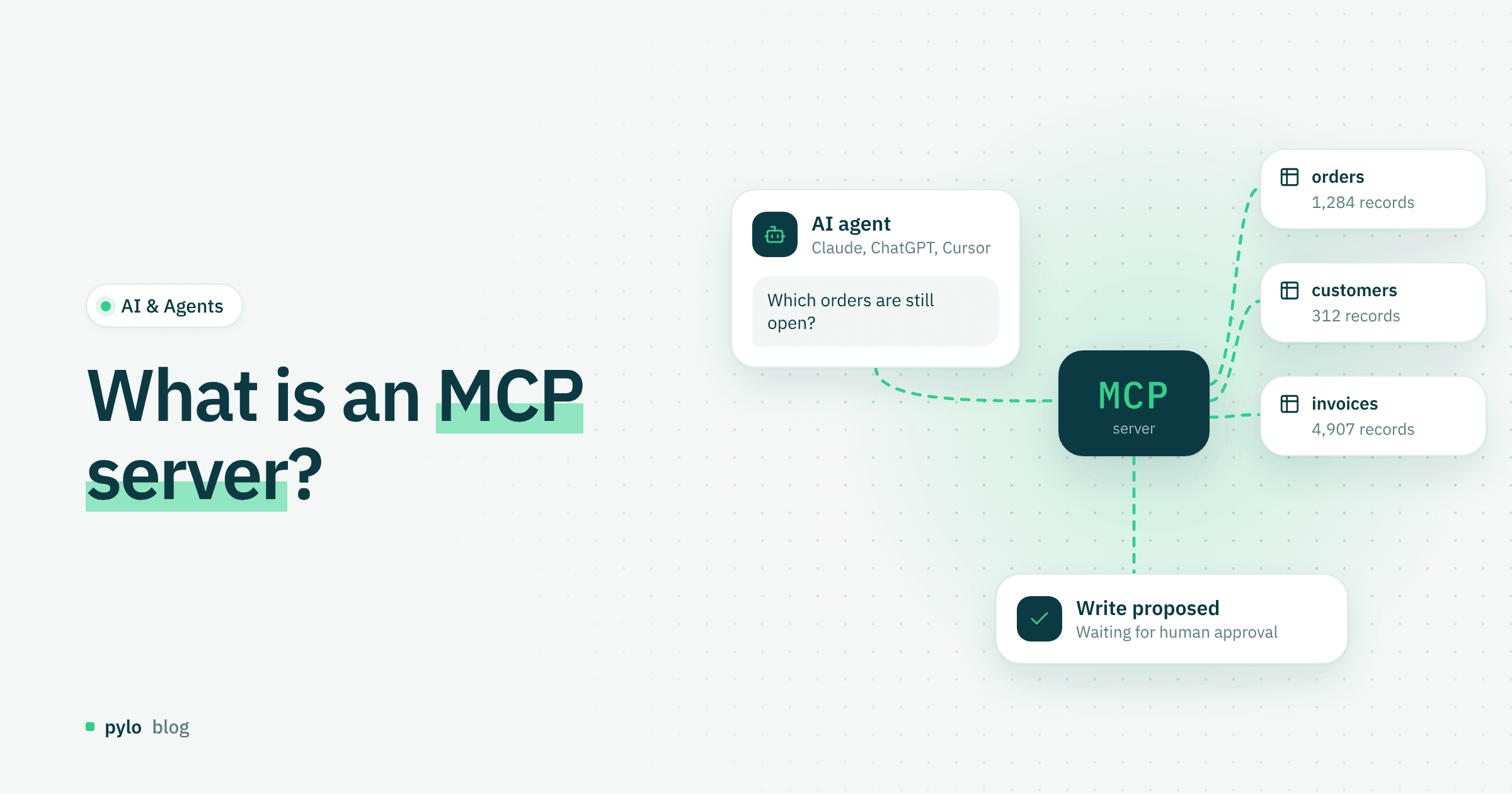
AI and automated systems are developing fast, and that is no longer news. One term that comes up more and more often is the MCP server. What is an MCP server, how does it work, and why does the Model Context Protocol (MCP) matter for companies? This post answers all three questions.
Model context protocol: definition
MCP stands for Model Context Protocol. It is an open communication protocol for connecting AI models to external systems, data sources and tools. At its core, MCP lets different AI models and applications talk to each other without a custom integration for every pair.
In practice, this means: instead of building a separate interface for every tool, MCP gives AI systems, servers and applications one shared language. That is why many people see it as a major shift.
In short: the Model Context Protocol is a translator, or broker, between AI models and a company's real IT.
What is an MCP server?
An MCP server is the technical infrastructure that runs and manages the Model Context Protocol. It sits between an AI model, such as GPT-5 or another LLM, and the external resources that model needs: databases, APIs, company systems or cloud services. The MCP server makes sure the model gets the right context to give informed, current answers. In short, it organizes the flow of data between AI, user and system in real time.
How does an MCP server work?
An MCP server can be split into three main components:
1. MCP core (communication core)
The core is the heart of the server. It runs the standardized protocols that let AI models understand requests and interact with external sources.
2. Adapters and connectors
These modules connect the MCP server to internal and external data sources, for example CRM systems, ERP software, databases or cloud services such as AWS, Azure or Google Cloud. The adapters "translate" data structures so the AI model can use them.
This step gets simpler when your business data already lives in a backend with a defined schema. In pylo, you model your data as entities and relations, and the built-in MCP server lets an agent query and write those same entities, with no separate adapter to build.
3. Context layer (context management)
Here the MCP server manages the context: the information that matters for the AI model's current request. This lets the AI answer more precisely and in line with the situation.
The basic principle
A typical request through an MCP server runs like this:
A user sends a request through an application, for example a chatbot, a dashboard or an API.
The MCP server receives the request and checks which systems or data sources are relevant.
The server fetches the required information through the adapters.
The context layer prepares the data so the AI model can understand it.
The AI model processes the data and returns an answer that fits the context.
The MCP server can also send responses back to the application, for example when the model wants to store or fetch data.
The result is AI that works inside existing company systems, without sensitive data being passed to external services unchecked.
Why does an MCP server matter for companies?
For companies, an MCP server brings strategic and technical benefits:
1. Secure integration of AI into company systems
Companies can use AI models such as GPT-5 without uploading their sensitive data directly into external systems. The MCP server is a secure bridge between the internal data network and the AI.
2. Efficiency through standardization
MCP gives you one consistent way to communicate. That saves time and development work, because you do not need new interfaces for every application.
3. Flexibility and scalability
An MCP server is modular, so companies can connect new data sources, tools or models as needed, without rebuilding their existing IT infrastructure.
4. Better data quality and context
The context layer filters and prioritizes data. The AI works more precisely and returns more relevant results.
5. Data protection and compliance
An MCP server lets you enforce internal policies, access rights and encryption. That matters under the GDPR and new AI regulation.
Write access is where control matters most. In pylo's MCP server, agents read data directly, but every write becomes a proposal that a person approves or declines before anything changes.
A fictional example
A mid-sized company wants to bring AI into its customer management. Through an MCP server, it connects a language model such as GPT-5 to its internal CRM system. When an employee asks, for example, "Show me all customers who ordered last week and have not heard back from us yet", the MCP server pulls the matching CRM data automatically. The CRM itself stays inside the company, and only the records the question needs reach the model. The result is an efficient, secure way of working with AI support.
To try this with your own data, the pylo docs show how to connect an AI app to pylo's MCP server.
Conclusion
An MCP server is the bridge between modern AI and the systems a company actually runs on. With the Model Context Protocol, companies can connect AI models to their existing systems in a secure and scalable way. That makes the MCP server a core building block for any company that wants to build AI into its processes in a planned way.
If you want agents to work with your business data, pylo combines a backend for your data models with an MCP server, and every agent write goes through human approval.
Keep reading
AI & Agents
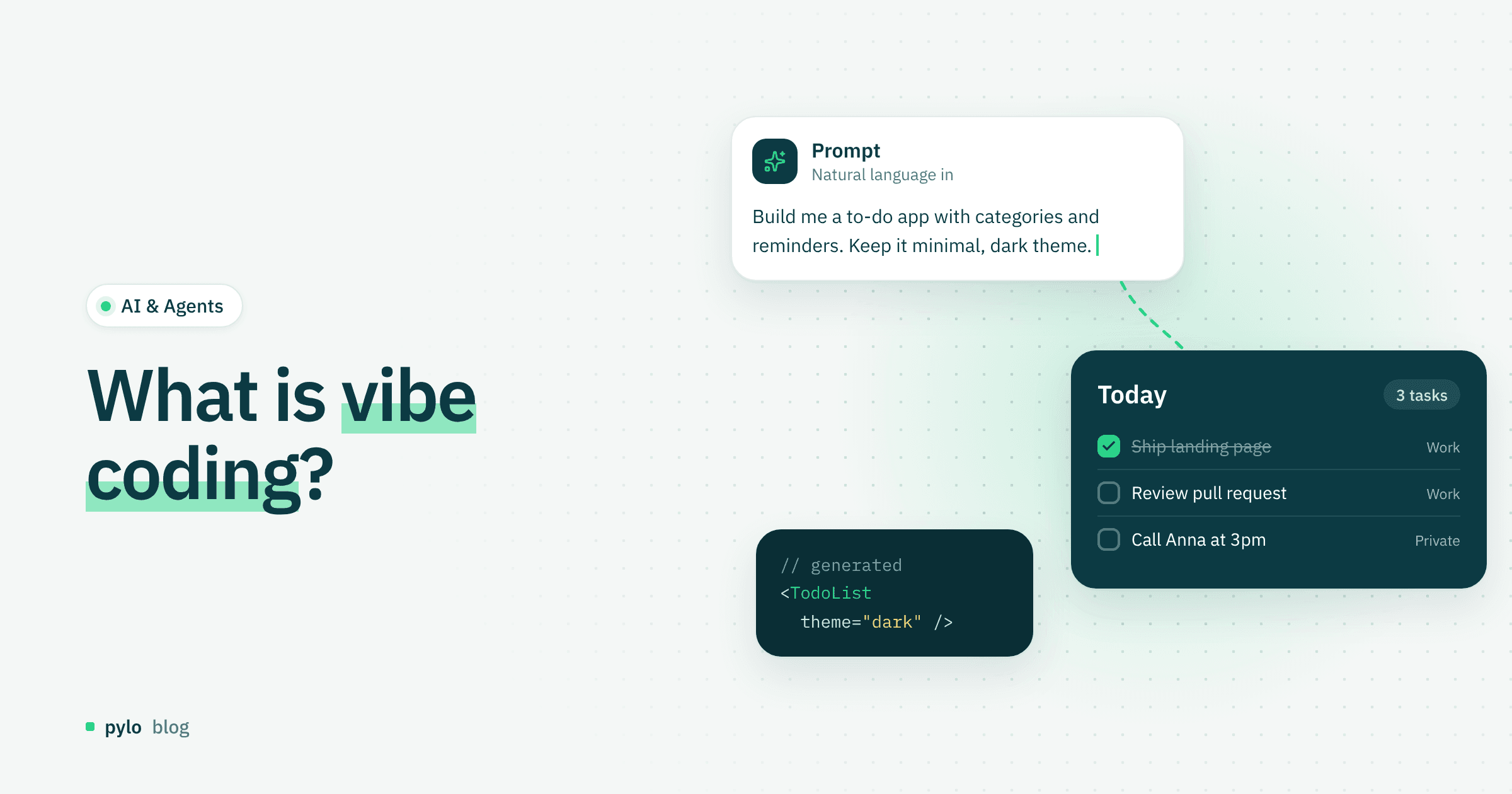
What is vibe coding? Definition, workflow and tools
Vibe coding changes how software gets built: you describe an idea and AI turns it into an application. Here is what vibe coding is, which tools exist, how the workflow looks, and what it means for developers and non-developers.
Read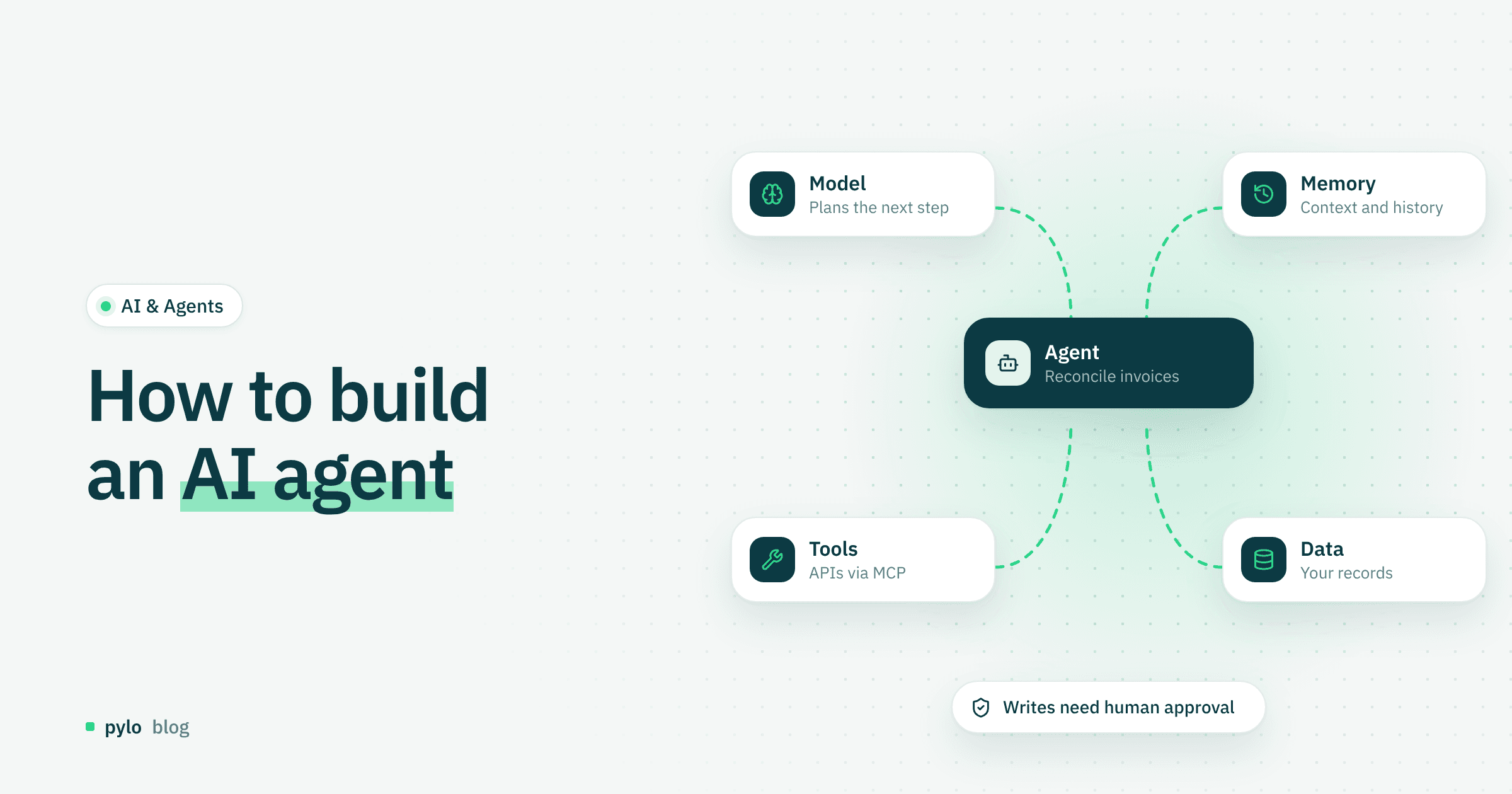
AI & Agents
How to build an AI agent: types, steps and tools
AI agents handle everything from automated tasks to real decisions. Here is how they work and how to build one for your company.
Read