
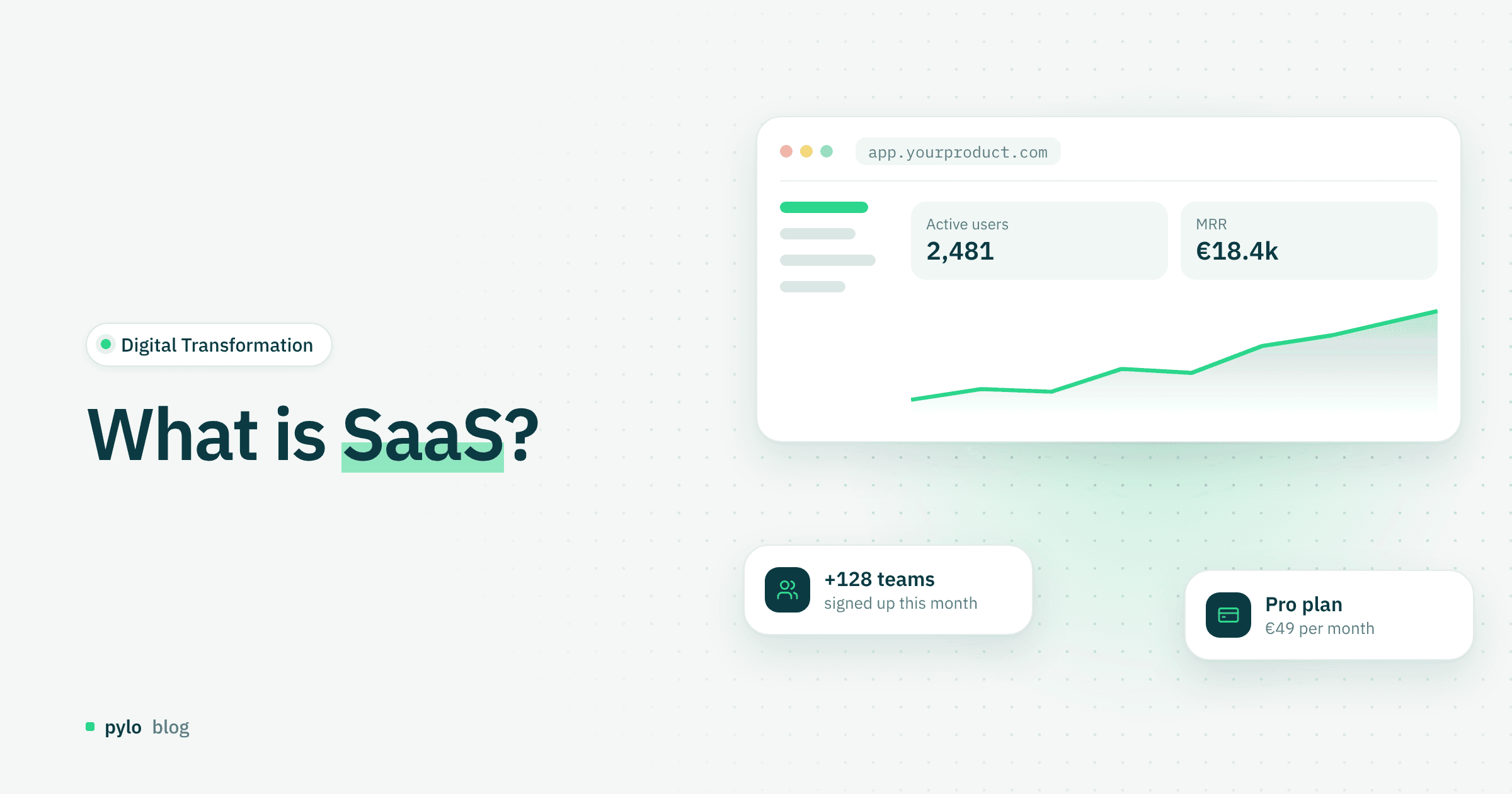
The way companies use software has been changing for years. One central model is SaaS, short for software as a service. This post answers the question "what is SaaS?", explains how it works and why more and more companies rely on it, in plain terms and with practical examples.
What is SaaS?
The abbreviation SaaS stands for software as a service. It describes a cloud-based delivery model for software. Instead of installing programs locally on their own computer or server, users access applications over the internet. The software is also not bought outright. It is rented as a service. Well-known examples are tools for communication, accounting or project management.
Typical traits of software as a service:
Access through a browser or app
Hosting on external servers in the cloud
Billing on a subscription basis
Automatic updates by the provider
How does SaaS work?
Software as a service is built on cloud technology. The software runs on the SaaS provider's servers, and users sign in through a browser or an app. Data is stored and managed in the cloud, not on the user's own machines. The provider handles maintenance, updates and security, mostly through automated processes. For companies this means they no longer have to deal with installation, maintenance or infrastructure and can start using the application right away.
If you are building a SaaS product yourself, the provider side is where the work is: data models, user sign-in and an API for your frontend. A backend-as-a-service like pylo covers that layer. You define your entities and relations, get a GraphQL API generated from them, and use the built-in authentication for your users.
How SaaS differs from traditional software
The biggest difference between SaaS and traditional software is the delivery model:
Traditional software
One-time license fee
Installed on local devices or servers
You handle maintenance and updates yourself
High upfront investment
Software as a service (SaaS)
Monthly or annual fees
Used over the internet, in the cloud
Updates and maintenance included
Low entry costs
Pros and cons of SaaS
Advantages of SaaS
Cost efficiency: no large upfront investment and no expensive hardware
Scalability: the number of users can be adjusted as needed
Access from anywhere: all you need to get started is a browser and an internet connection
Automatic updates: you always run the current version
Less complexity: SaaS usually gives faster access to the data you need in one system, while traditional setups often depend on several tools and extra hardware
Fast rollout
Disadvantages of SaaS
Medium to high dependence on the provider
Internet connection required
Data protection and compliance can be a concern
Long-term costs can rise
SaaS examples in business
Software as a service is used in almost every part of a company today. It gives companies quick access to modern software without a complex IT infrastructure. Typical areas where SaaS is used:
Communication and collaboration
Tools for video calls and team chat
Customer management (CRM)
Managing customer relationships and sales processes
Accounting and finance
Cloud-based invoicing and finance software
Project management
Planning, organizing and tracking projects
Marketing and automation
Tools for email marketing and campaign management
Looking for a SaaS backend for your development?
pylo is itself a SaaS product. It is a backend-as-a-service for teams that want to spend their time on the product, not on backend plumbing. You model your data, and pylo provides the API, typesafe SDKs, auth and files, so your developers write less boilerplate and ship projects faster.
Conclusion: what SaaS means for the future
The meaning of SaaS goes beyond a technical model. It marks a basic shift in how companies use software. They get flexibility, lower costs and easy scaling. With remote work and global collaboration, software as a service has become indispensable for many organizations. Companies should still check carefully which SaaS solution fits their requirements, so they end up with the best and most secure option for their use cases.
If you are on the other side and building your own SaaS, pylo can be the backend for it. The pricing page shows what it costs to start.
Keep reading
Digital Transformation
Business process digitization: how to get it right
Learn which processes are easiest to digitize and how to approach business process digitization step by step.
Read
AI & Agents
What is vibe coding? Definition, workflow and tools
Vibe coding changes how software gets built: you describe an idea and AI turns it into an application. Here is what vibe coding is, which tools exist, how the workflow looks, and what it means for developers and non-developers.
Read