
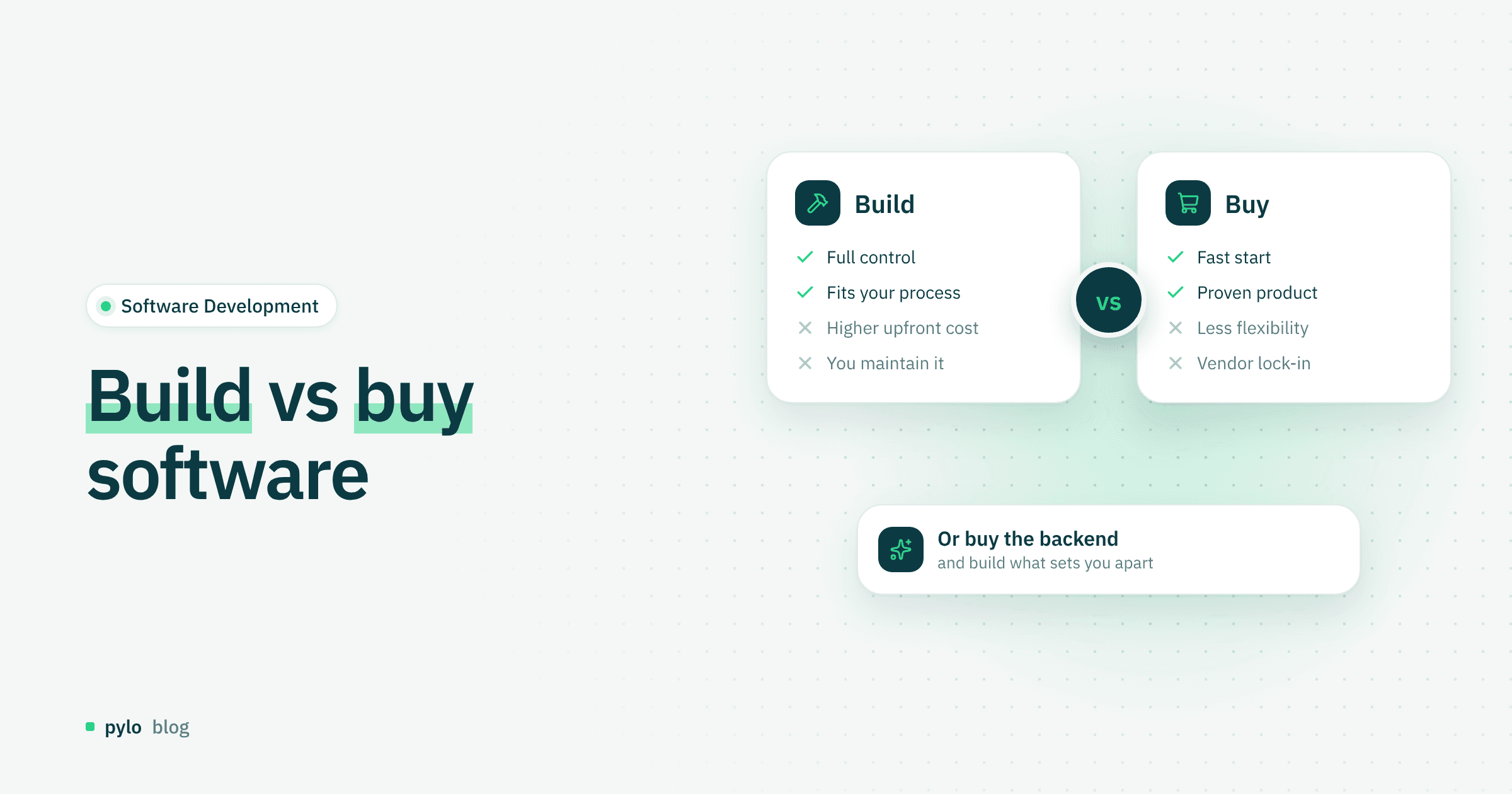
Companies keep running into the same question: should they develop software themselves (build) or purchase a finished product (buy)? The build vs buy software decision has long-term effects on cost, flexibility, the ability to innovate and competitiveness, so it deserves careful thought. In this post we explain the build vs buy approach, look at why it matters for companies and give concrete recommendations on when to build and when to buy.
What does build vs buy software mean?
Build:
With the build approach, a company develops the software in-house. It can also hire a software development firm to create a custom solution. Either way, the solution is tailored to the company's specific business processes, requirements and needs.
Buy:
With the buy approach, the company uses a finished software product that is already on the market. This can be standard software, SaaS (software as a service) or an industry-specific solution. Implementation is faster, but the result is less flexible.
Why the decision matters for companies
Choosing between build and buy matters because it affects several core areas, for example:
Cost and budget planning:
Build: High upfront investment in development, testing and infrastructure. Maintenance and further development add costs over the long term.
Buy: Predictable license or subscription costs and a faster payback, but possible hidden costs for customization or integrations.
Flexibility and customization:
Build: Very flexible. It allows unique features that can give you a competitive edge.
Buy: Highly standardized, fewer customization options, and you depend on the vendor for updates and extensions.
Time to market:
Build: Longer development times. A good fit when custom solutions are central to the strategy.
Buy: Faster implementation and immediate use.
Technical control and security:
Build: Full access to the source code, ownership of the data, security to your own standards.
Buy: Strong dependence on the vendor. Security updates and compliance have to be checked.
Innovation and competitive advantage:
Build: Ideal for creating new, industry-specific solutions that set you apart from competitors.
Buy: Standardized solutions that suit proven processes and efficiency gains.
A large part of the build cost often goes into plumbing every application needs, such as user authentication or data import and export. That part rarely sets you apart, so it is worth checking whether you can buy it and spend the build budget elsewhere.
How to decide: build or buy software
Companies can approach the build vs buy decision systematically:
Analyze the business requirements:
Ask whether standard solutions cover the core requirements or whether you need special features.Cost-benefit analysis:
Compare development, license and maintenance costs over a defined period.Risk assessment:
Consider project risks, dependence on third-party vendors and technical challenges.Strategic relevance:
Assess how important the software is for your competitive advantage and business strategy.Scalability and future readiness:
Check whether the solution can keep up with company growth and technical change.
When is build the better choice?
When custom features decide how you compete
When you need a high degree of flexibility and control over data and processes
When the company has its own resources and know-how for development and maintenance
When long-term strategic independence from third-party vendors matters
Building does not have to mean writing every layer yourself. With a backend platform you define your own data model with entities and relations and get the API for it generated, so your team can spend its time on the features that make the difference.
When is buy the better choice?
When saving time and fast implementation are the priority
When cost and budget are limited and you need a fast ROI
When standard processes are enough and no unique differentiation is needed
When the vendor should handle maintenance, updates and support
Conclusion
The build vs buy decision is a strategic process that goes beyond comparing costs. Companies need to weigh their business requirements, resources, timelines and strategic goals to make the right choice. Build offers maximum flexibility, control and room for innovation. It is the right fit for companies that want to stand out through unique software. Buy wins on fast implementation, predictable costs and simple maintenance, which makes it a good choice for efficiency and standard processes.
In practice, many companies use a hybrid strategy: they develop core processes in-house (build) and purchase supporting applications (buy). This combines the advantages of both approaches.
pylo is one way to apply this middle path to a single application. You buy the backend plumbing, meaning APIs, auth, workflows and imports, and build the parts that differentiate you on top of it.
Keep reading
Software Development
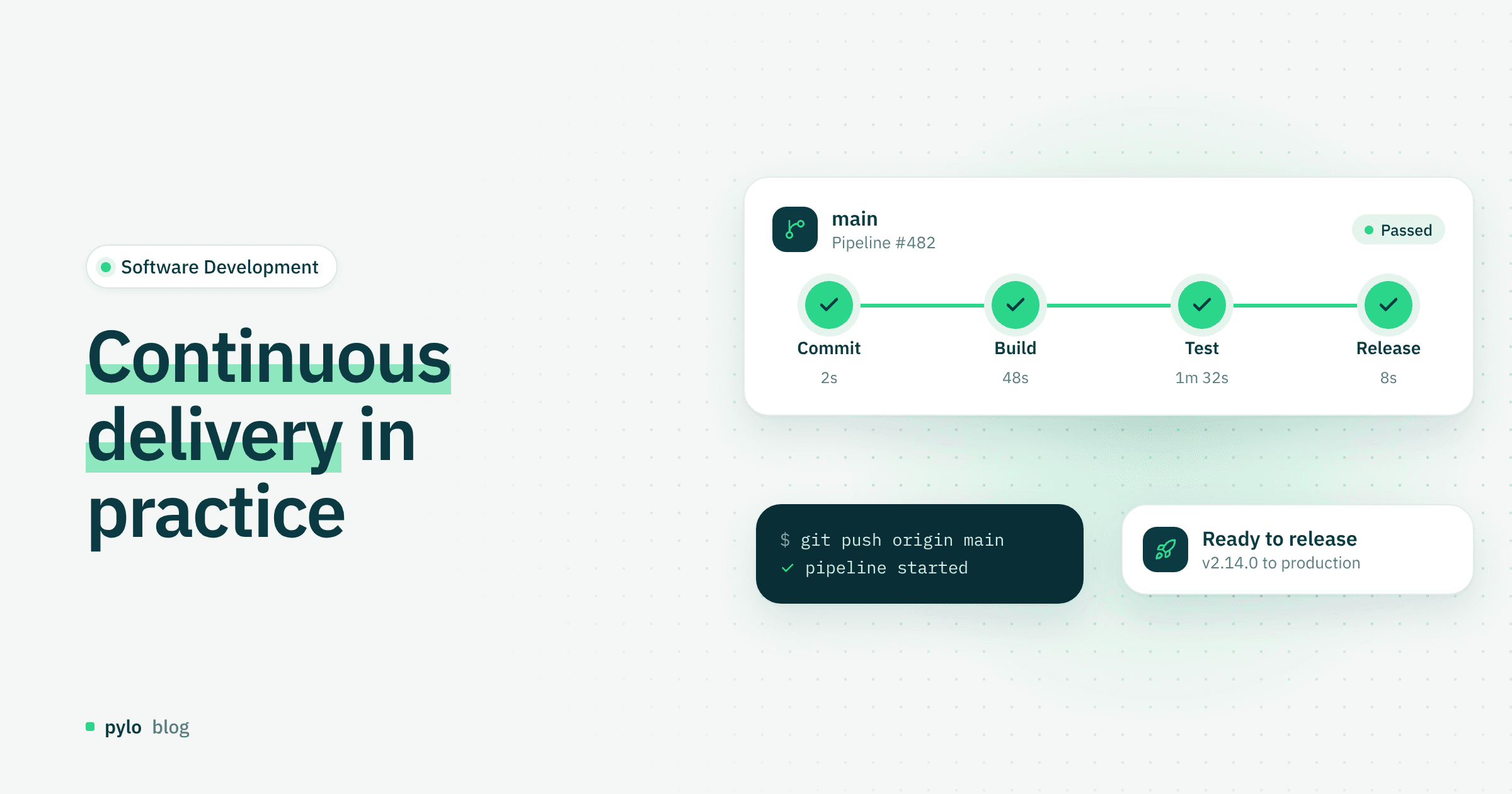
Continuous delivery: definition, best practices and tools
What is continuous delivery, and why does it matter for modern software development?
Read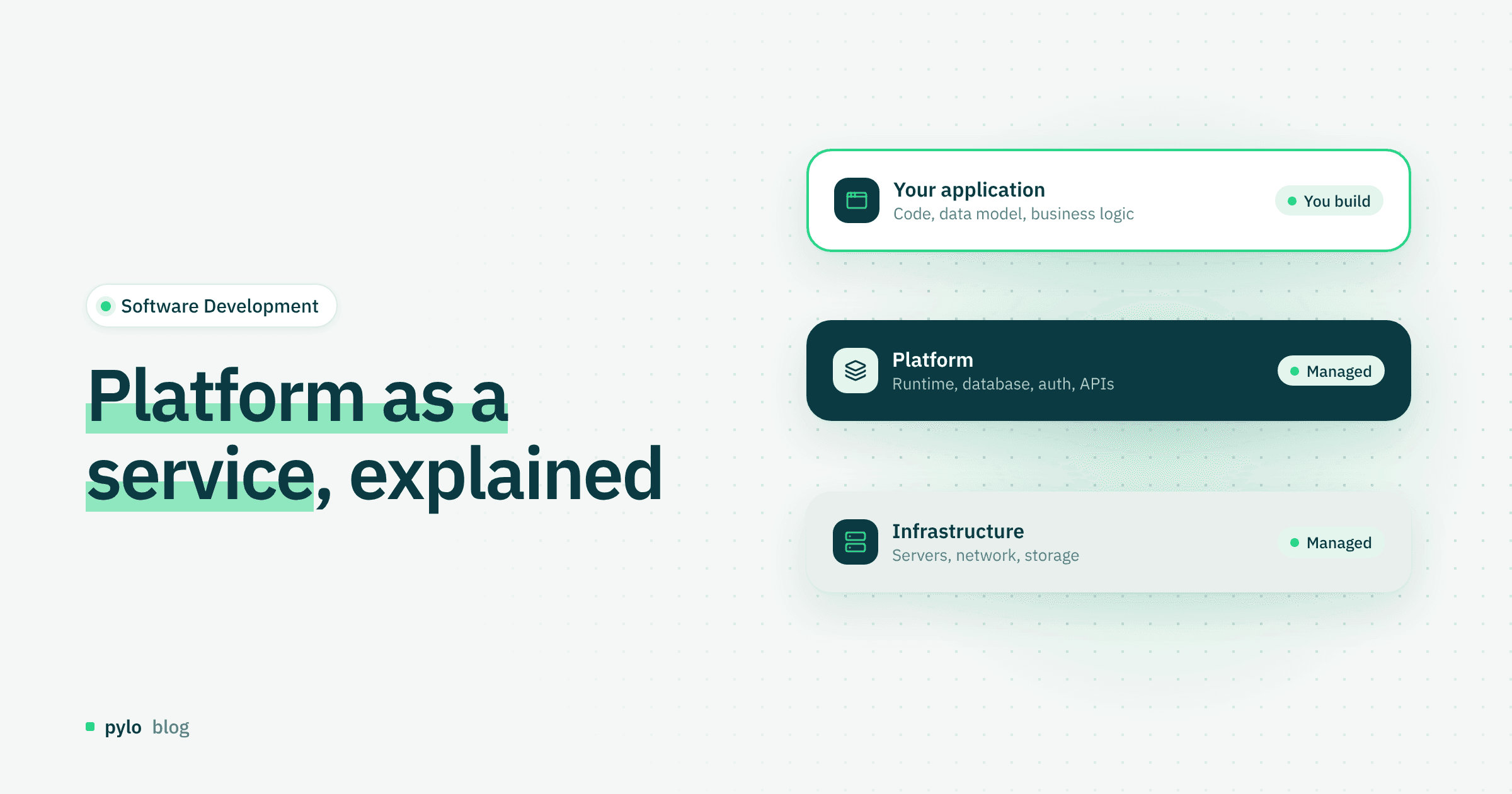
Software Development
Platform as a service (PaaS) explained: how it works and benefits
What is platform as a service, and how does it make development simpler and faster? Here is how PaaS works and what it takes off your plate.
Read